If you’ve read Scarecrow Secrets or Hidden Secrets, you already know Lucy Harford — former police constable, watercolour painter, reluctant detective, and full-time resident of The Curious Cat with a ginger cat who has no respect for boundaries and impeccable timing when it comes to finding things that matter.
I wanted to share something about what these books are trying to do — because now that there are two of them, and a third on the way, I can see more clearly what the series has become, and I think readers who’ve been with Lucy from the beginning deserve to know where the writing is heading.
The Why, Not Just the How
From the very first book, I’ve been as interested in why someone commits a crime as in how or with what. In Scarecrow Secrets, the killing isn’t driven by greed or calculated malice — it grows from grief that was never given anywhere to go, from a family tragedy where love and loss became tangled beyond anyone’s ability to separate them. That instinct was always part of what I wanted these books to be.
What’s happened across two novels is that I’ve learned to go deeper with it. The why hasn’t changed — but my ability to explore it has developed. Each book has asked me to look more carefully at human motivation, at the complicated ways people carry their wounds, and at how similar circumstances can lead to very different choices. The puzzles are still fair — I aim to have every clue visible to an attentive reader, and the solutions are, I hope, genuinely satisfying. But the emotional and psychological landscape of the crime now carries equal weight with the mechanics.
What I Mean by Deep Cozy
These are still cozy mysteries in every way that matters: amateur detective, close-knit community, murder solved through intelligence and observation rather than violence, a resolution that restores some version of order, and a cat who makes himself indispensable in ways that are entirely plausible and only slightly suspicious. What’s changed is the ground beneath them.
The victims aren’t cardboard figures who exist only to be killed. They’re complex people whose deaths create genuine grief alongside genuine relief, and Lucy has to navigate both. The suspects carry real secrets that are consequential even when they aren’t connected to the murder. And the killers are driven not by simple villainy but by the accumulation of experience — wounds carried too long, hope eroded too slowly, until something fundamental gives way.
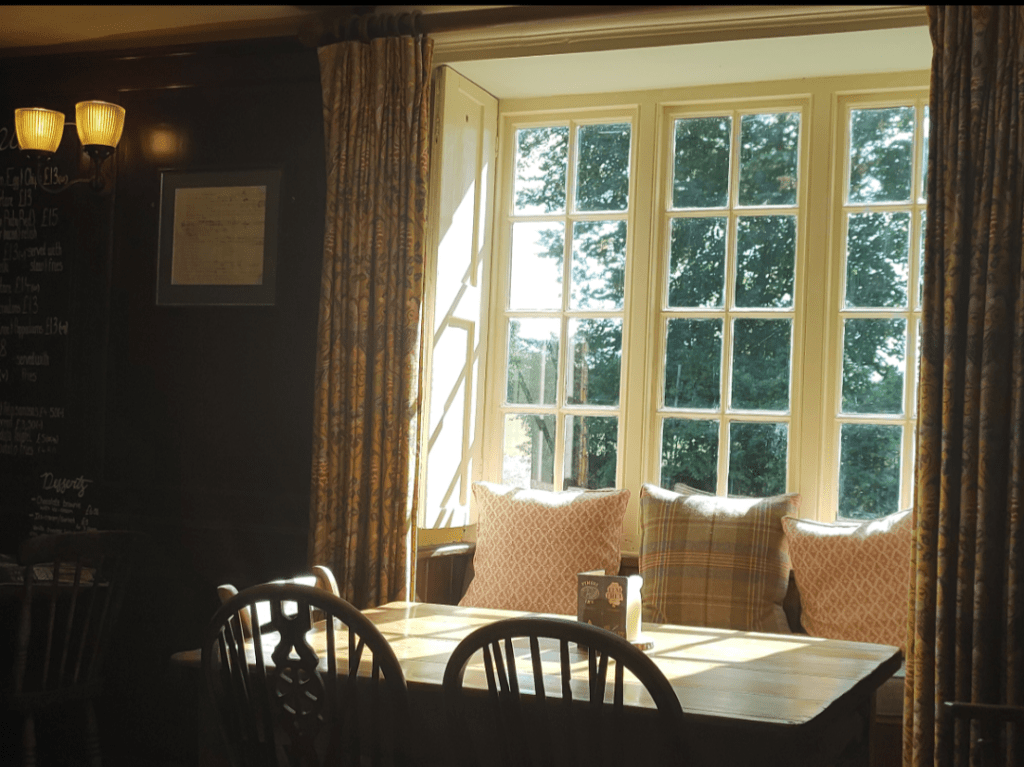
I’ve come to think of these as “Deep Cozy” mysteries. The settings remain recognisably ordinary — narrowboats, canal-side cafés, village pubs, local festivals. The warmth, humour, and accessibility that make this genre so beloved are all present. What I’m adding, is a depth to the motives and human relationships involved.
I hope the books entertain, but as the series progresses, I hope their plots and characters also linger a little. That the reader finishes, having solved the puzzle and having felt something true about the people involved.

What Stays the Same
Lucy is still Lucy. She still favours her good leg on uneven ground. She still reaches for her paintbrush when the world gets too loud. She still asks the kind of careful, open questions that make people tell her things they hadn’t planned to say. Sir Meows-a-Lot still turns up where he shouldn’t be, still charms people who’d rather not be charmed, and still has a talent for drawing attention to the things that matter. Emma is still the friend who arrives with energy, outside perspective, and a journalist’s instinct for the documentary evidence that Lucy’s observational skills can’t reach on their own.
And the canal network is still the thread that connects everything — carrying Lucy to new communities, new mysteries, and the ongoing question of whether this nomadic life is freedom or something she hasn’t quite examined yet.
If You Enjoy…
If you enjoy writers like Louise Penny, Elly Griffiths, or Ann Cleeves — authors who work within the traditions of mystery fiction while giving their characters room to breathe and their stories room to mean something — I hope you’ll feel at home with where this series is heading.
If you haven’t met Lucy yet, Scarecrow Secrets is where it all begins — a village scarecrow festival, a vicar found staged in a field, and a woman who discovers that the life she was running from and the life she was running toward might be the same thing. And Hidden Secrets, just published, takes Lucy to a medieval town where a present-day murder is entangled with an eighty-year-old mystery — and with her own family’s history.

The best mysteries, I believe, aren’t just about solving crimes — they’re about understanding the people caught up in them. That’s what I’m trying to write.
 P. Thompson - Mystery Author
Join the conversation